Get Your Business Cited in AI Search Answers
12 min read
2 views
You can rank first and still be invisible
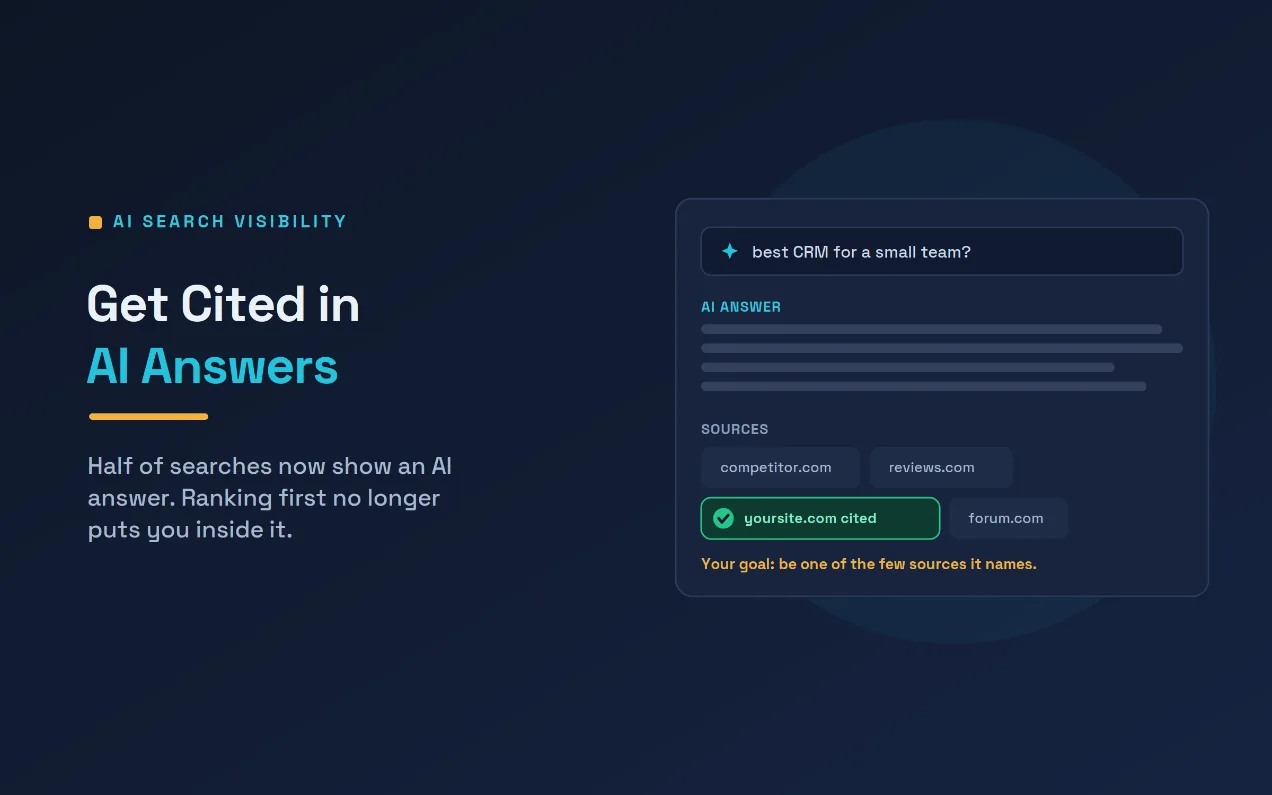
For twenty years, the goal of search was simple: rank as high as you can, and the clicks follow. That model is breaking. Today, roughly half of searches show an AI-generated answer at the top, written by the search engine or a chatbot, and that answer names only a few sources. You can rank first in the traditional results and still be completely absent from the AI answer sitting above you, because the overlap between ranking first and being cited by AI has fallen sharply. In AI search, the new goal is not just to rank, it is to be one of the sources the AI trusts and quotes. This shift has a name, generative engine optimization, or GEO, and this guide explains how to get your business cited.
The stakes are real, because AI search is where a fast-growing share of attention now lives, and visitors who arrive from an AI answer often come ready to act. The good news is that getting cited is learnable. It comes down to helping AI engines understand your content, trust your business, and quote you cleanly. This article covers how AI search builds an answer, how to structure content so it can be quoted, the structured data your developers should add, and how to measure whether it is working.
How an AI engine actually builds an answer
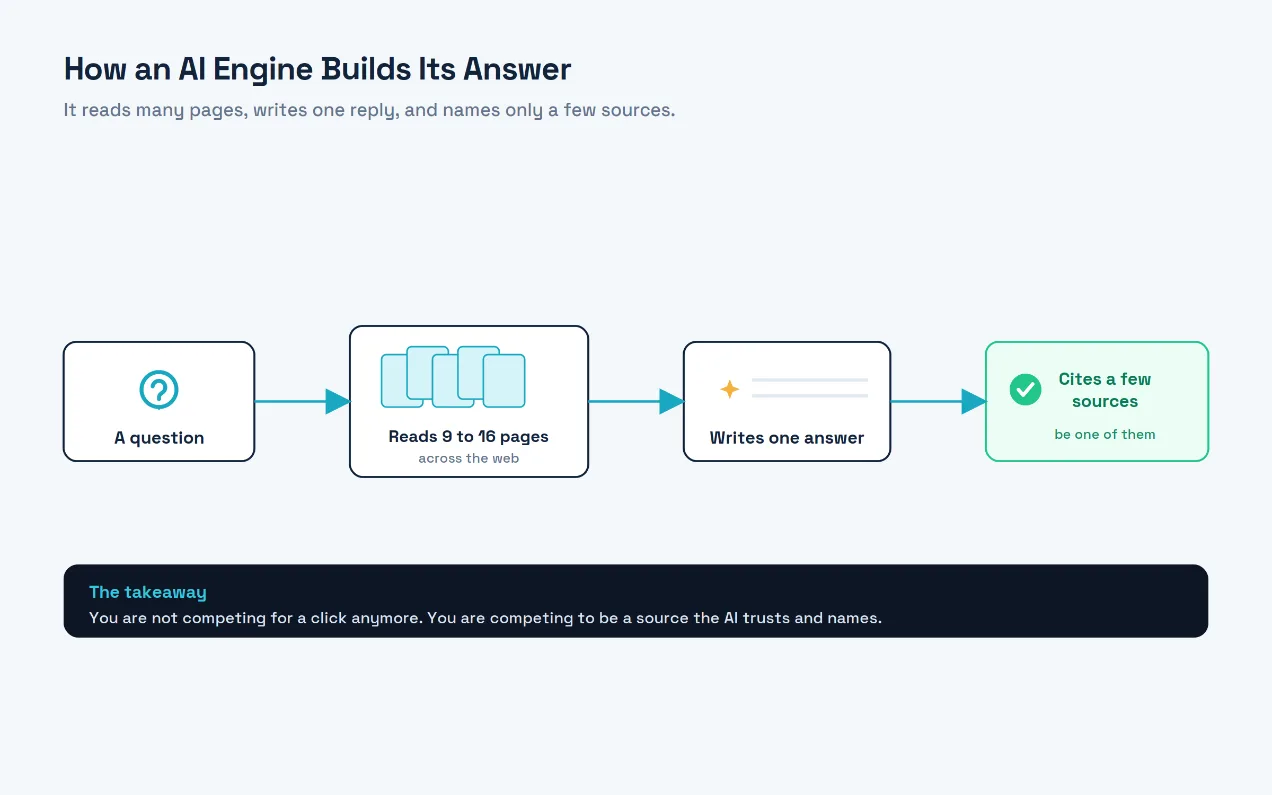
To get cited, it helps to know what happens behind the scenes. When someone asks a question, an AI search engine does not just rank pages, it reads across many of them, often nine to sixteen sources for a single answer, then synthesizes one reply and names a handful of the sources it leaned on. As the flow above shows, you are no longer competing only for a click; you are competing to be one of the few pages the engine both understands well enough to use and trusts enough to name. That reframes the whole job. Everything that follows is about making your content easy for AI to extract and your business easy to trust.
Why being cited beats simply ranking
In practical terms, a citation in an AI answer does three things a normal ranking no longer guarantees. It puts your name in front of the user at the exact moment the engine is giving its recommendation, it lends you the engine's credibility, and it can send highly qualified visitors who convert well because they arrive already informed. Meanwhile, as AI answers handle more queries directly, click-through to traditional results is declining, so relying on rankings alone means slowly losing visibility you used to own. Treating AI search as a place to be cited, not just ranked, is how you stay discoverable as this transition accelerates.
Structure your content so AI can quote it
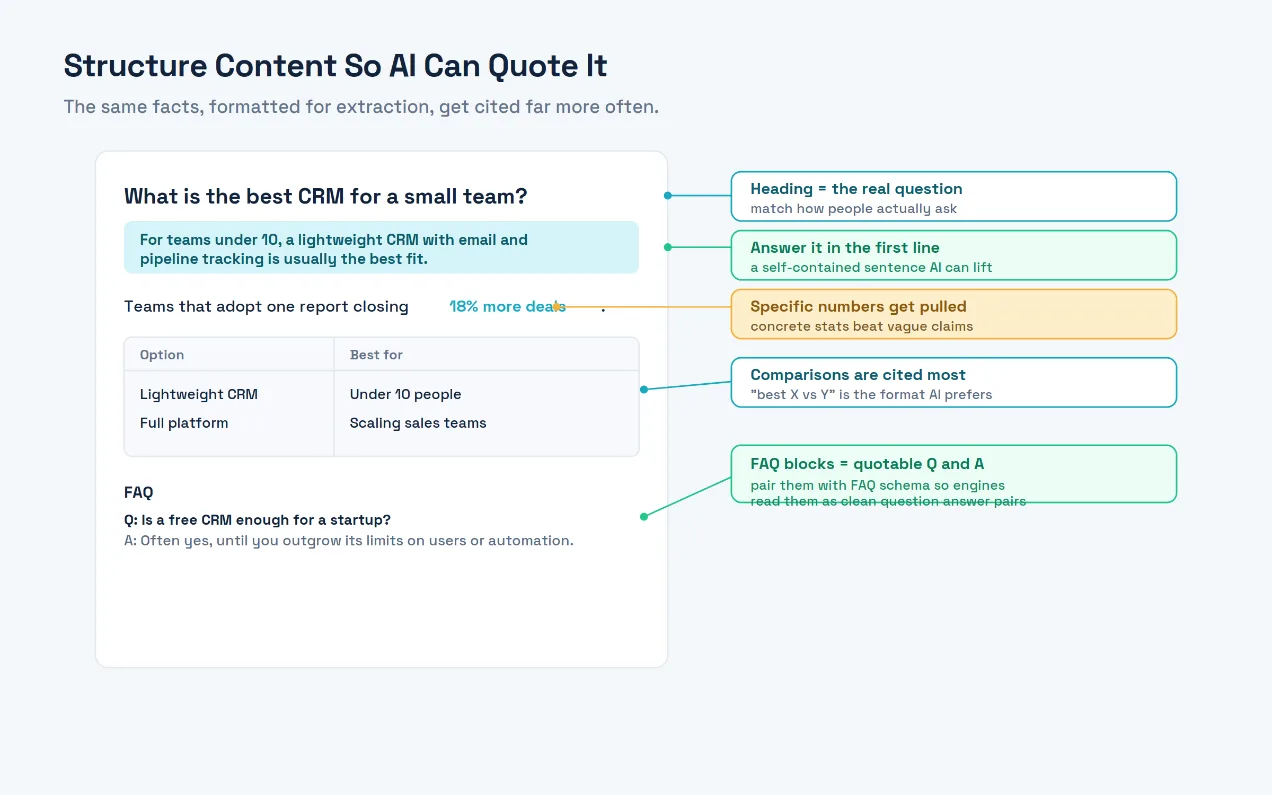
The single biggest lever you control is how you structure content, because AI engines strongly prefer content they can extract cleanly. The annotated page above shows the pattern. Lead each section with the actual question people ask, phrased the way they would ask it, as a clear heading. Answer it in the very first line with a self-contained sentence the engine can lift without needing the rest of the paragraph. Include specific numbers, because concrete statistics get pulled far more often than vague claims. Use comparisons, since "best X versus Y" content is one of the formats AI engines cite most. And add a short FAQ of real questions with direct answers. Structured, scannable content of this kind has been found to earn substantially more visibility in AI answers than the same facts buried in dense prose. Write for a reader first, but format so a machine can quote you.
For your developers: add structured data
Structured data, written as JSON-LD, is how you tell search engines in explicit terms what your content and your business are. It is one of the highest-leverage technical steps for AI search, because it removes guesswork. Add these snippets to the relevant pages.
Organization and identity
Describe your business as an entity, and use sameAs to connect it to your other verified profiles. This consistency is what builds a clear identity across the web.
<script type="application/ld+json">
{
"@context": "https://schema.org",
"@type": "Organization",
"name": "Acme Analytics",
"url": "https://acme.example",
"logo": "https://acme.example/logo.png",
"description": "CRM and sales analytics for small teams.",
"sameAs": [
"https://www.linkedin.com/company/acme-analytics",
"https://github.com/acme-analytics",
"https://www.crunchbase.com/organization/acme-analytics"
]
}
</script>
FAQ content, made machine-readable
If a page has a genuine FAQ, mark it up so engines read it as clean question-and-answer pairs, exactly the format they like to quote.
<script type="application/ld+json">
{
"@context": "https://schema.org",
"@type": "FAQPage",
"mainEntity": [{
"@type": "Question",
"name": "Is a free CRM enough for a startup?",
"acceptedAnswer": {
"@type": "Answer",
"text": "Often yes, until you outgrow its limits on users or automation."
}
}]
}
</script>
Articles and their authors
For guides and posts, declare the article and a real, credentialed author, which supports the experience and expertise signals AI engines weigh.
<script type="application/ld+json">
{
"@context": "https://schema.org",
"@type": "Article",
"headline": "Best CRM for a Small Team",
"datePublished": "2026-07-01",
"author": {
"@type": "Person",
"name": "Jordan Lee",
"jobTitle": "Head of Sales Operations",
"sameAs": "https://www.linkedin.com/in/jordanlee"
}
}
</script>
Validate your markup with Google's Rich Results Test before you ship, and keep it accurate, since structured data that misrepresents a page can hurt more than it helps.
Make it obvious who you are
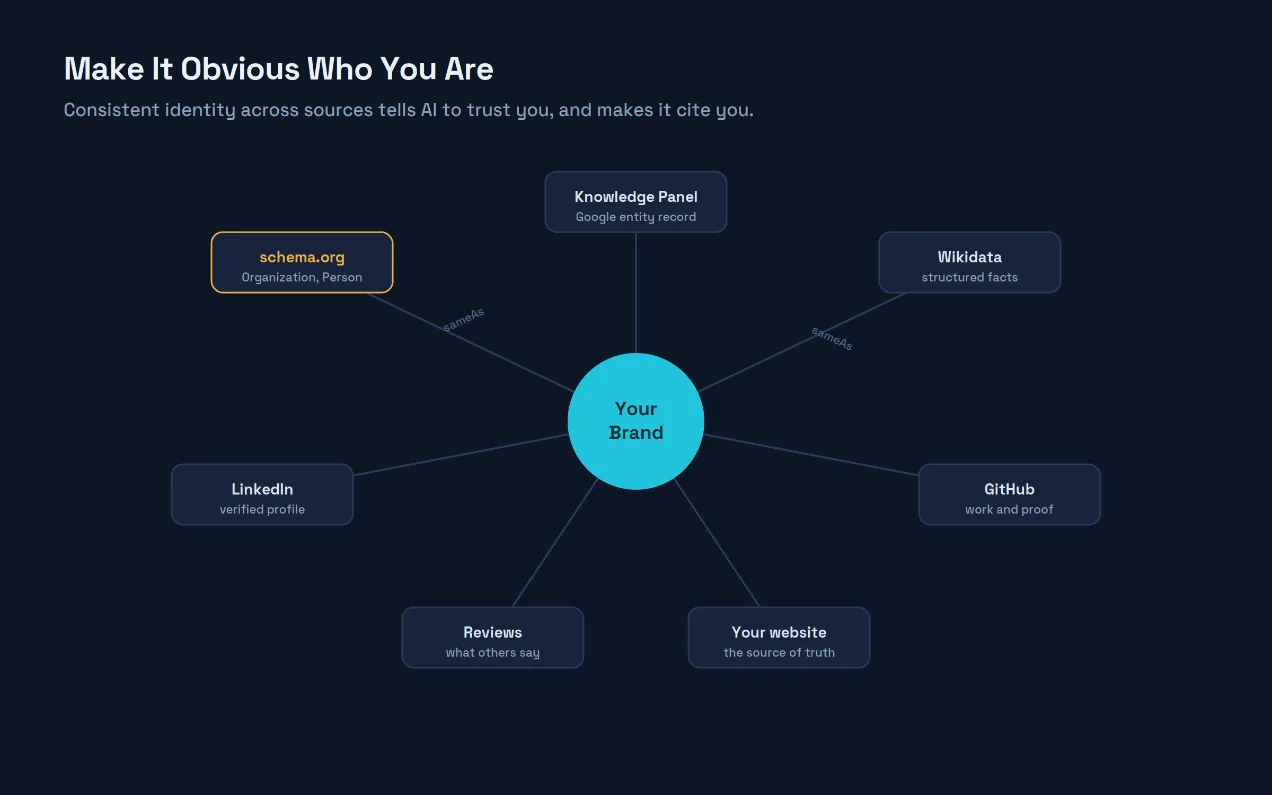
AI engines cite sources they can identify and trust, so entity clarity matters as much as any single page. The idea, shown above, is that your business should look like the same, consistent entity everywhere it appears: the same name, description, and details across your website, your structured data, your business listings, your social profiles, and third-party sources like review sites. When those signals agree, an AI engine can confidently connect them into one recognizable entity and is far more comfortable naming you. When they conflict, it hesitates. This is also why building genuine authority off your own site matters, since AI answers pull from many sources and weigh what others say about you, not just what you say about yourself.
Measure citations, not just rankings
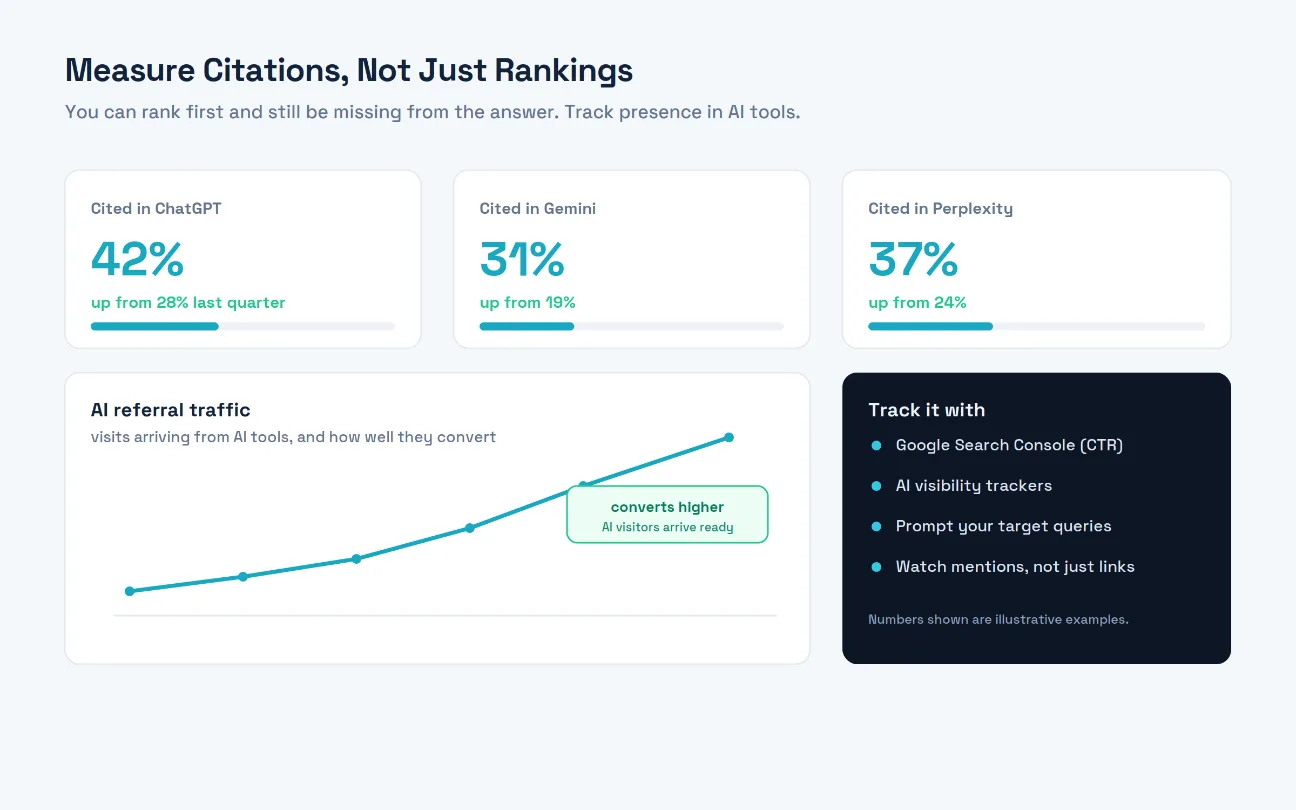
You cannot manage what you do not measure, and the old metric of keyword rankings no longer tells the whole story, since you can rank first and still be missing from the answer. The dashboard above shows the shift in what to track. Alongside your normal rankings and traffic, watch how often you are actually cited or mentioned in the major AI tools for your target questions, and track referral traffic arriving from them. A simple starting habit is to prompt the AI engines yourself with the questions your customers ask and see whether you appear. Use Google Search Console to watch click-through trends, add one of the emerging AI-visibility trackers as they mature, and treat mentions and citations as first-class metrics next to clicks. Presence in the answer is the new position one.
Start being the source AI names
AI search has changed the job from ranking pages to earning citations, and the businesses that adapt now will own the visibility others are quietly losing. The path is clear and practical: understand that AI reads many sources and names a few, structure your content so it can be quoted cleanly, add the structured data that makes your pages and your identity unambiguous, keep your entity consistent everywhere, and measure citations rather than rankings alone. Start with your most important pages, rewrite them to answer real questions in self-contained lines, add the schema, and check whether the AI engines begin to name you. In AI search, being the source the answer cites is the visibility that now matters most.
Articles Worth Reading
If missed calls are costing you customers, an AI voice agent that answers every call can pick up the slack around the clock.
Learn how to qualify and follow up on sales leads with AI so your best prospects never go cold from a slow reply.
Learn how to predict customer churn with AI and reach at-risk customers before they cancel.
Learn how simple demand forecasting can help cut food waste and costs by stocking closer to real demand.
Learn how to automate your product photography with AI and turn a single raw shot into on-brand images for every channel.
If you're just getting started, learn how to set up Claude Code and ship your first task in your terminal.
You can save time by packaging repeat prompts into reusable Claude Code skills that your whole team can run the same way every time.
Useful Links
Frequently Asked Questions
Let's build
Have a project worth building?
If this maps to a problem in your business, tell me about it. I will tell you honestly whether software or AI can fix it, and how I would build it.