Showing 6 of 6 articles

Backend Engineering · 17 min read
7 months ago
How a Hidden N+1 Query Slowed API by 6x and the Exact Steps I Used to Fix It
The API wasn’t crashing. Nothing looked broken. But production response times quietly became six times slower. This is a real-world breakdown of how a hidden N+1 query slipped through reviews, how I proved it in Laravel, and the exact steps that fixed it permanently.
database optimizationlaravelorm optimization+3 more
Read 
Backend Engineering · 9 min read
7 months ago
How I Built an AI-Assisted Log Analysis System to Catch Production Issues Before Users Did
Logs were there. Alerts were there. Incidents still slipped through. This guide explains how I combined traditional logging with AI-driven pattern analysis to proactively detect production issues and reduce firefighting.
ai observabilitybackend performancesystem design+2 more
Read 
Backend Engineering · 15 min read
9 months ago
Our Cache Made the App Slower. The Redis Cache Mistake I’ll Never Repeat
We added caching to speed things up. Latency dropped, then quietly got worse. This is a real production bug breakdown of how a Redis cache invalidation mistake slowed critical pages and how I fixed it without rewriting the backend.
backend scalabilityperformance optimizationredis mistake+3 more
Read 
Database Engineering · 12 min read
9 months ago
A Single Missing Database Index Took Our App from 120ms to 4.8s. Here’s How I Found It
This database performance issue didn’t look like a typical failure. There were no crashes, no alerts, and no obvious slow query warnings. Locally, everything felt fast, masking the missing database index that only impacted production. As traffic increased, query performance degraded, leading to rising latency and unpredictable response times. This is exactly how hidden indexing issues silently turn into major production bottlenecks.
backend scalabilitysqldatabase optimization+4 more
Read 
Backend Engineering · 14 min read
9 months ago
How I Eliminated Memory Leaks in a High-Traffic Node.js API That Everyone Thought Was “Stateless”
The API didn’t crash immediately. It slowed down gradually, then fell over under load. The problem wasn’t traffic. It was invisible memory retention hiding inside “clean” Node.js code.
high traffic apisjavascriptbackend performance+2 more
Read 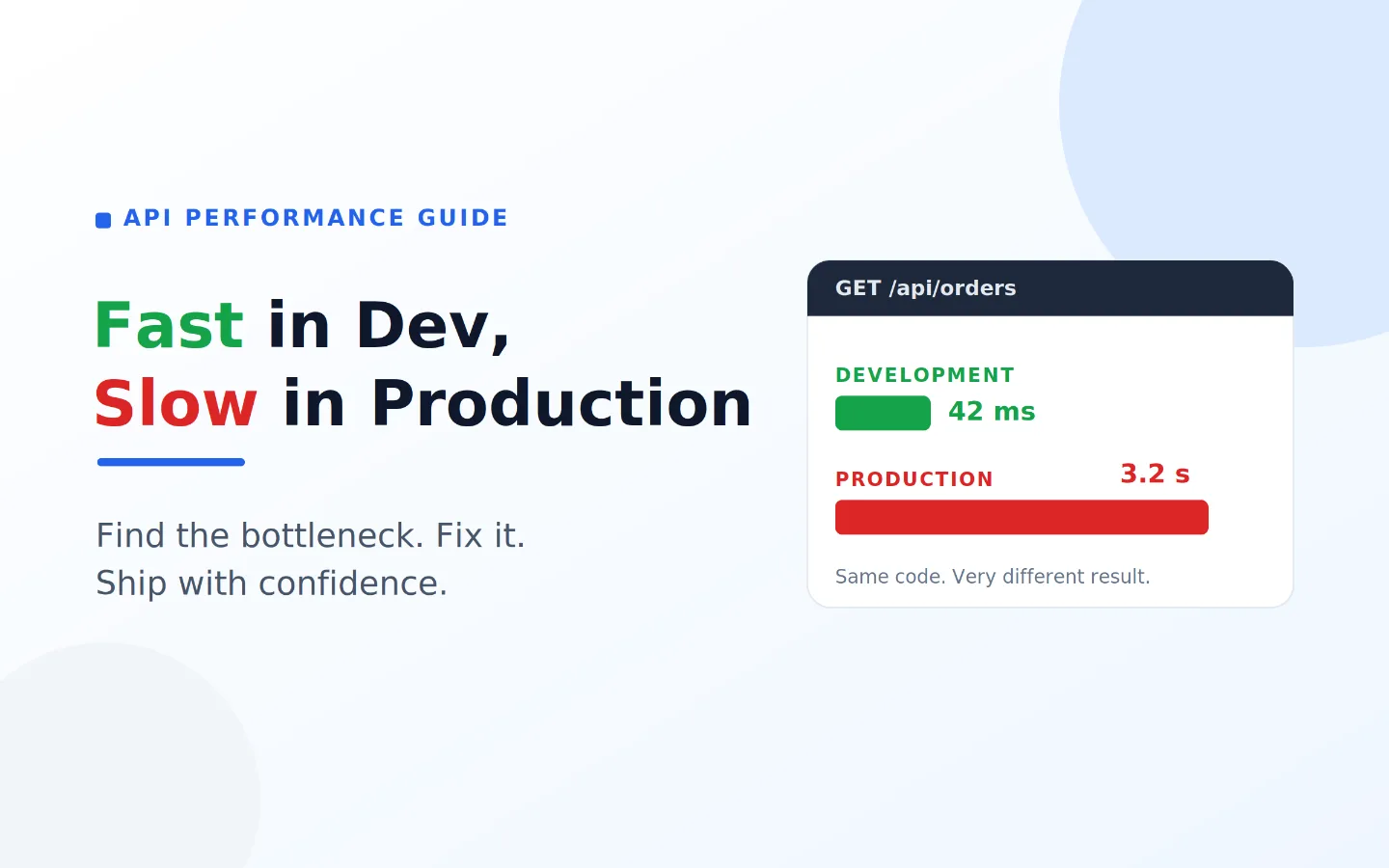
Backend Engineering · 8 min read
10 months ago
Fast in Dev, Slow API in Production: Fixing Your API
Your API feels instant on your laptop, then crawls the moment real users arrive. This beginner friendly tutorial explains why a fast API becomes a slow API in production, and walks you step by step through the fixes in PHP, Postgres, and the frontend.
backend scalabilitybackend architecturescalable systems+9 more
Read