How to Build a Profitable Service-Based IT Company
software services startup
it services business
tech services company
it company profitability
service business scaling
14 min read
5 views

Building a profitable service-based IT company often starts deceptively easy. Early revenue creates momentum, but without a solid IT services business model, cracks appear as you try scaling the service business. Poor pricing strategy, unstable margins, and delivery pressure quickly impact IT company profitability. This is where most founders realize that growth without structure leads to stagnation, not scale.
Starting a service-based IT company has one dangerous advantage: you can start earning before you’re ready.
You don’t need a product. You don’t need funding. You just need one client willing to pay. That early win creates momentum, but it also hides structural weaknesses that surface later when workload increases, expectations rise, and margins start shrinking.
Most service companies don’t fail because they lack skill. They fail because the business model is misunderstood.
The First Reality Check – Revenue Is Not Profit
The earliest mistake founders make is equating invoices with success.
In the beginning, revenue feels like validation. But service revenue is deceptive. Every rupee earned is tied to:
Time
People
Ongoing delivery responsibility
Unlike products, revenue does not compound automatically. If you stop working or delivering, revenue stops. This realization usually hits when founders are busy all day but cash still feels tight.
What You Actually Face in the First 6–12 Months
This phase is chaotic, regardless of how skilled you are technically. You juggle sales, delivery, hiring, support, and finance simultaneously. There are no departments. You are the system.
The most painful challenges here are not technical:
Unpredictable cash flow
Clients delaying payments
Scope creep disguised as “small requests”
Undervaluing work to close deals
At this stage, survival matters more than optimization. But the decisions you make here shape whether the company can ever scale.
Pricing Is the First Structural Decision (And Most Get It Wrong)
Early pricing is usually fear-driven. Founders price low to avoid rejection. That creates a client base that:
Negotiates aggressively
Expands scope freely
Resists price increases later
Low pricing doesn’t just hurt margins. It shapes client behavior. The turning point comes when pricing is based on value and outcomes, not effort. This is when services start becoming businesses instead of freelance operations.
Hiring Doesn’t Reduce Load Until Much Later
Hiring feels like relief. It isn’t. In service companies, the first hires usually increase workload. You now manage:
Onboarding
Code reviews
Client communication gaps
Quality control
This is where many founders feel trapped. They can’t stop delivering, and they can’t stop managing. The only way out is process, not more people.
System Design for a Service Business (Yes, It’s Still System Design)
Service companies need architecture just like software systems.
Key systems that determine profitability:
Lead qualification system
Pricing and scoping framework
Delivery templates and reusable assets
Knowledge transfer and documentation flow
Billing and collections discipline
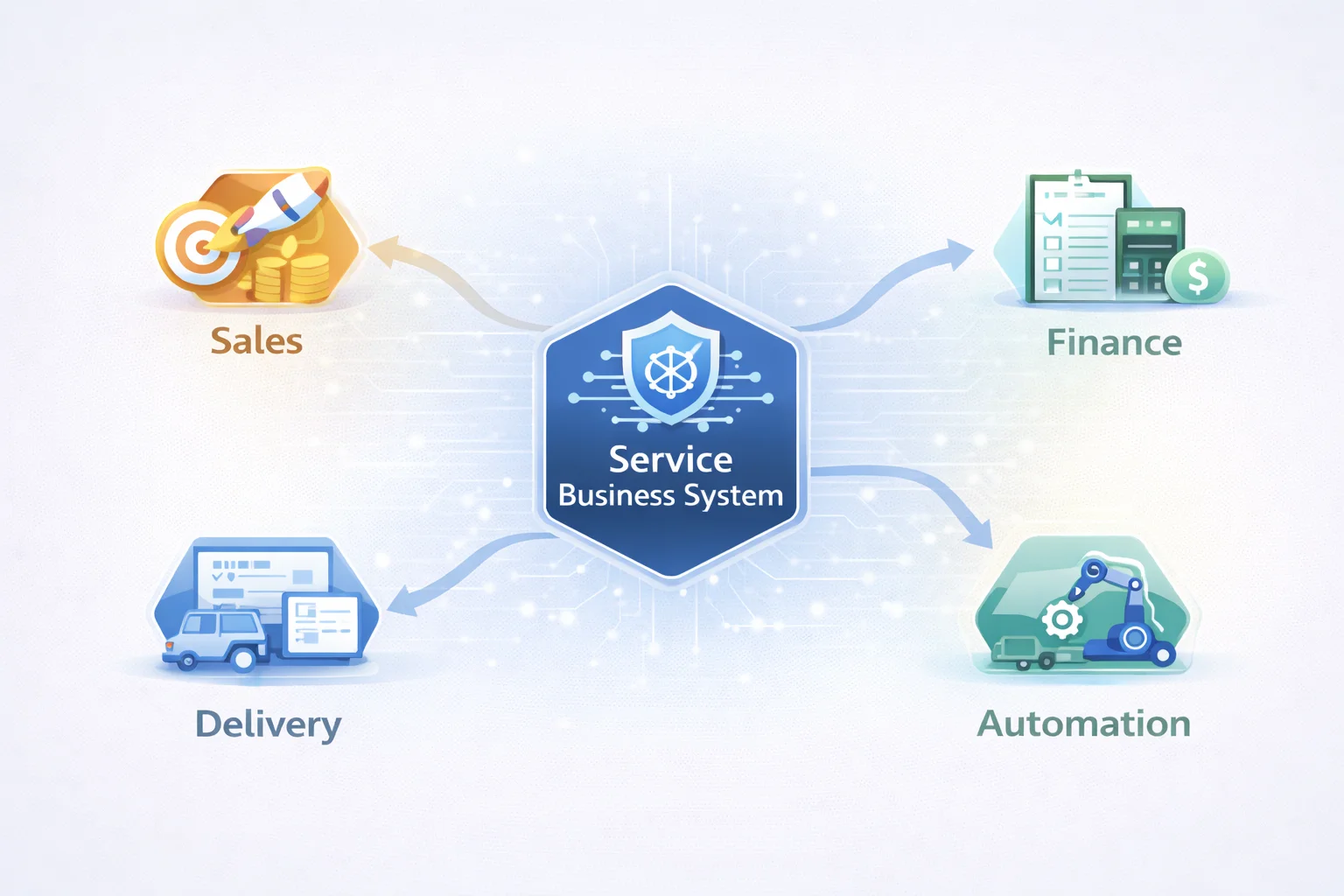
Without these, growth increases stress instead of profit. This is where automation and AI quietly become powerful.
How AI Starts Helping in a Practical Way
AI does not replace engineers or salespeople in service companies. It removes friction.
Examples from real operations:
AI-assisted proposal drafting using past successful proposals
Automated scope breakdowns from client requirements
Internal knowledge search across past projects and decisions
Estimation sanity checks based on historical delivery data
For instance, proposal generation stopped being a blank-page exercise once historical context was structured and searchable.
function normalizeRequirement(text) {
return text
.toLowerCase()
.replace(/\d+/g, "<num>")
.replace(/deadline|urgent|asap/g, "<priority>");
}This kind of normalization allows AI to compare new requests with past projects and flag risk early.
The Shift from “Doing Work” to “Running a Company”
The hardest transition is psychological. Founders often remain the best engineer in the room. That becomes a bottleneck. Profitability increases only when founders move from:
Writing most of the code
Solving every client problem
to:
Designing systems
Enforcing boundaries
Reviewing outcomes instead of tasks
This shift is uncomfortable and unavoidable.
The Profitability Inflection Point
Service companies usually become profitable when three things stabilize:
Predictable pricing and scope control
Repeatable delivery patterns
Reliable collections and cash flow
At this stage, revenue quality improves. Clients stay longer. Margins stop fluctuating wildly. Growth feels intentional instead of reactive.
This is when founders finally feel they are running a company, not chasing work.
Why Many Service Companies Stall at “Comfortable”
A common plateau appears once income is stable.
Founders stop pushing because:
Personal income is “good enough”
Growth would require uncomfortable restructuring
Risk feels unnecessary
This is where companies either:
Stay small but stable
Or reinvest into systems, specialization, and positioning
There is no wrong choice. But it must be conscious.
Final Takeaway
Service-based IT companies succeed not by working harder, but by designing leverage into human effort.
The early phase rewards hustle. The growth phase rewards structure. Profitability comes when both are balanced.
Treat your service company like a system. Because that’s exactly what it is.
Suggested Links
If you’re building a service company and noticing systems degrade as workload grows, the same patterns appear in software systems. The earlier breakdown on missing database indexes mirrors this perfectly: things work until scale exposes hidden costs.
This also connects closely with the AI-assisted content and log analysis guides, where automation was used not to replace people, but to preserve clarity as complexity increased. The same principle applies when scaling services.
Frequently Asked Questions
Let's build
Have a project worth building?
If this maps to a problem in your business, tell me about it. I will tell you honestly whether software or AI can fix it, and how I would build it.
